



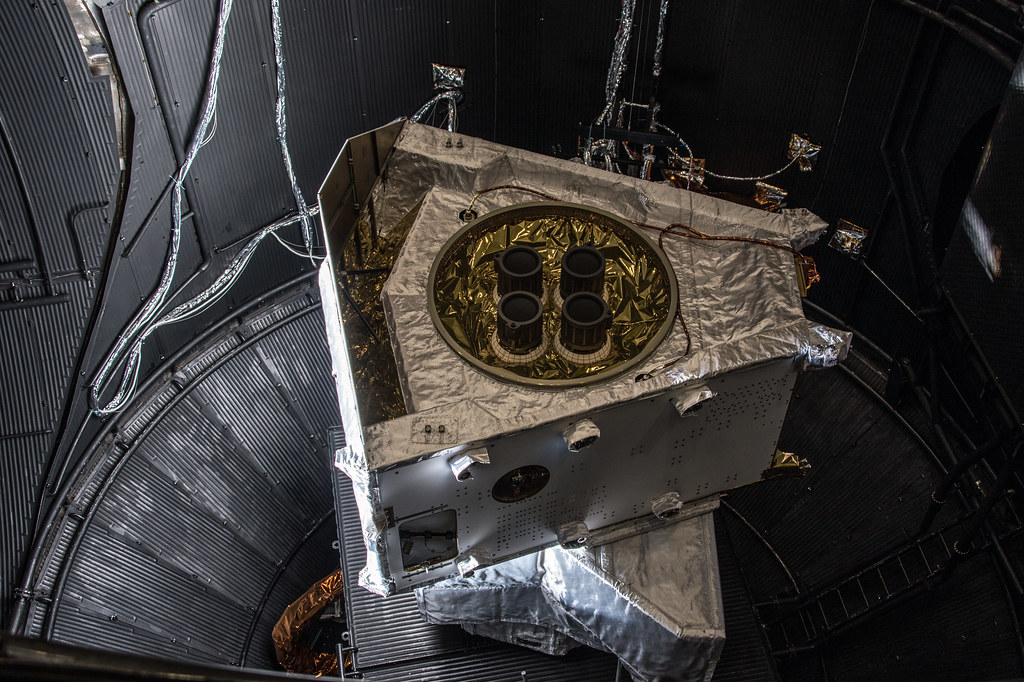
BepiColombo Mercury orbit signifies a remarkable milestone in space exploration. After an eight-year journey, this mission has successfully entered orbit around Mercury, showcasing advanced technology and perseverance.
Overview of BepiColombo Mission
The BepiColombo mission, a collaborative effort between the European Space Agency (ESA) and the Japan Aerospace Exploration Agency (JAXA), has successfully reached its destination, entering Mercury orbit after an arduous journey of eight years. Launched in October 2018, this ambitious project aims to deepen our understanding of the solar system’s innermost planet.
Mercury, known for its extreme temperatures and proximity to the Sun, presents unique challenges for exploration. The mission consists of two separate spacecraft: the Mercury Planetary Orbiter and the Mercury Magnetospheric Orbiter. Together, they are designed to study Mercury’s surface, composition, magnetic field, and exosphere.
This mission is particularly significant as it marks a pivotal moment in space exploration. The data gathered will not only enhance our knowledge of Mercury but also provide insights into the formation and evolution of terrestrial planets, including Earth.
Key objectives of the BepiColombo mission include:
- Mapping Mercury’s surface: High-resolution imaging will reveal geological features and surface compositions.
- Studying the magnetic field: Investigating Mercury’s magnetic field will help understand its internal structure.
- Examining the exosphere: Understanding the thin atmosphere surrounding Mercury is essential for grasping its environmental conditions.
As BepiColombo begins its scientific operations, the findings from this mission promise to reshape our knowledge of the inner solar system and the origins of rocky planets.
The Journey to Mercury
The journey to Mercury has been a remarkable achievement for the BepiColombo mission, showcasing the power of international collaboration in space exploration. Launched in October 2018, the spacecraft has traveled over 9 billion kilometers, overcoming numerous challenges to reach its destination.
One of the most significant aspects of the BepiColombo mission is its complex trajectory, which involves multiple flybys of Earth, Venus, and Mercury itself. This intricate path was designed to reduce the amount of fuel needed, allowing the spacecraft to utilize gravity assists to gain speed and navigate effectively through the solar system.
During its journey, BepiColombo has gathered valuable data, which will contribute to a deeper understanding of Mercury and its environment. The mission is a joint venture between the European Space Agency (ESA) and the Japan Aerospace Exploration Agency (JAXA), reflecting a commitment to advancing our knowledge of the innermost planet.
As BepiColombo finally enters Mercury orbit, scientists are eager to analyze the data it will send back. The mission aims to study the planet’s surface, magnetic field, and exosphere, providing insights into its formation and evolution. This endeavor not only marks a significant milestone for the mission but also reinforces humanity’s quest to explore and understand our solar system, making the BepiColombo Mercury orbit a proven journey to success.
Significance of Entering Mercury Orbit
The successful entry of BepiColombo into Mercury orbit marks a significant milestone for space exploration and our understanding of the solar system. This mission, which began its journey eight years ago, is the first to explore Mercury with two orbiters working in tandem. The significance of entering Mercury orbit cannot be overstated, as it provides an unprecedented opportunity to study the planet’s surface, magnetic field, and exosphere in detail.
Scientists have long been intrigued by Mercury, the closest planet to the Sun, yet it remains one of the least understood. The BepiColombo mission aims to address several key questions about the planet, including:
- Geological Activity: Is Mercury geologically active, and how has it evolved over time?
- Magnetic Field: What can the planet’s magnetic field tell us about its core and formation?
- Exosphere Composition: What are the components of Mercury’s thin exosphere, and how do they interact with solar wind?
Furthermore, the data gathered from BepiColombo will help scientists draw parallels between Mercury and other terrestrial planets, including Earth. As the mission unfolds, the findings could reshape our understanding of planetary formation and the dynamics of the innermost regions of our solar system. The successful entry into Mercury orbit is just the beginning of this groundbreaking exploration.
Future Plans for BepiColombo
The successful entry of BepiColombo into Mercury orbit marks a significant milestone, but the mission is far from over. As the spacecraft begins its scientific operations, a series of future plans are set in motion to maximize the mission’s potential.
One of the primary objectives is to conduct extensive studies of Mercury’s surface and geological history. The two orbiters, the Mercury Planetary Orbiter and the Mercury Magnetospheric Orbiter, will work in tandem to gather data on:
- The planet’s surface composition, helping scientists understand its formation and evolution.
- Magnetic field measurements, which will provide insights into Mercury’s core dynamics.
- Exosphere analysis, to study the thin atmosphere and its interactions with solar wind.
Moreover, the mission aims to explore the unique phenomena associated with Mercury’s extreme temperature fluctuations and its weak gravitational field. By leveraging advanced instruments onboard, BepiColombo will send back invaluable information that could reshape our understanding of terrestrial planets.
As the team prepares for the next phases of the mission, they remain optimistic about the discoveries waiting to be made in Mercury orbit. The findings from BepiColombo are expected to contribute significantly to planetary science and our knowledge of the solar system.
Technological Innovations in Space Exploration
The BepiColombo mission, a joint venture between the European Space Agency (ESA) and the Japan Aerospace Exploration Agency (JAXA), showcases a suite of technological innovations that have redefined space exploration. As the spacecraft successfully enters its Mercury orbit after an arduous eight-year journey, it highlights the remarkable advancements in engineering and scientific research.
One of the most significant innovations is the use of a dual-spacecraft design. This approach enables two orbiters, the Mercury Planetary Orbiter and the Mercury Magnetospheric Orbiter, to work in tandem, providing a comprehensive study of Mercury’s surface, atmosphere, and magnetic field. Such collaboration enhances data collection, allowing scientists to gain deeper insights into the planet’s characteristics.
Additionally, the mission employs advanced propulsion systems, including ion engines, which are more efficient than traditional chemical rockets. This technology not only reduces fuel consumption but also allows for precise maneuvering during the complex trajectory adjustments required for orbit insertion.
Another notable innovation is the implementation of cutting-edge instruments designed to analyze Mercury’s surface composition and geological processes. These instruments are equipped to withstand the extreme conditions of Mercury’s environment, ensuring that data collected will be both accurate and valuable for future planetary studies.
In summary, BepiColombo’s entry into Mercury orbit stands as a testament to human ingenuity, paving the way for future explorations of our solar system.
The successful entry into the BepiColombo Mercury orbit marks a significant milestone in our understanding of the innermost planet. Scientists are eager to analyze the data collected during the BepiColombo Mercury orbit mission to unveil the mysteries of Mercury’s surface and composition.
By europeanspaceagency via Openverse